Mediterranean interior design: how to bring it to a Marbella home
Mediterranean interior design means natural materials and earthy palettes that work with the coastal light rather than against it: limewash and terracotta, linen and aged timber. It is less a look you buy than a way of working with Marbella’s light, so the same room feels calm in July and warm in January. This is where Jade starts.
More high earners are furnishing homes along the prime Costa del Sol. Marbella, Benahavís and Estepona are seeing record relocation by wealthy buyers, according to The Olive Press in September 2026[1].
What is Mediterranean interior design?
The postcard version of the style is whitewashed walls and blue shutters. That is one regional note from the Greek islands, not the whole language, and copying it in a Marbella villa tends to look like a holiday let. What makes a room read as genuinely Mediterranean is texture and patina: materials that show their grain and their age, chosen because they will look better in ten years, not worse.
Jade leans on natural materials and earthy colours, mixing eclectic pieces that wear well. Her collections, Viva, Rustic Elegance and Naturals, each work from that starting point rather than a single colour formula.
Most people furnishing these homes are established buyers, not first-timers: under-30s make up less than 10% of Marbella purchasers[2]. They are usually moving a whole life over, and they want a house that feels settled from the first week.
Natural materials and colours that wear well
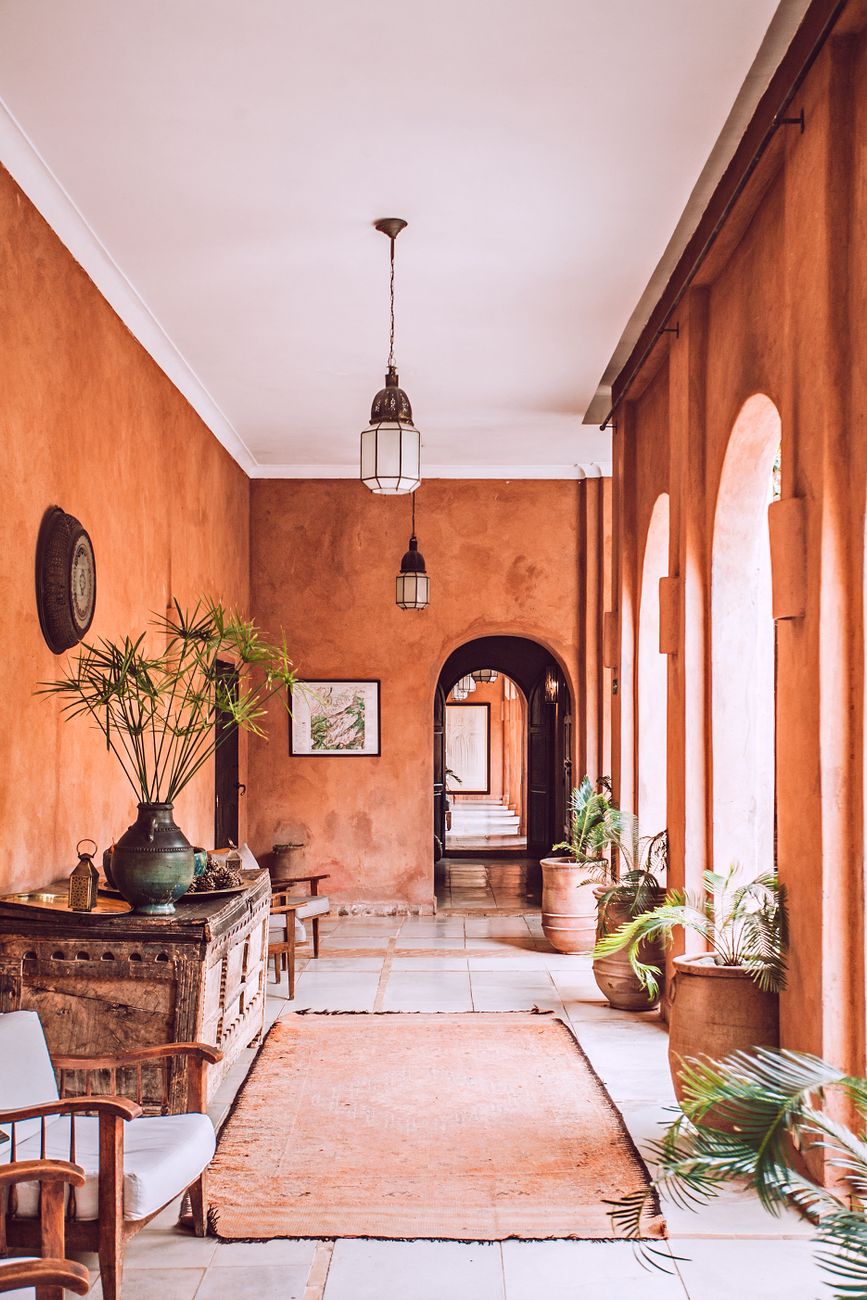
Start with limewash on the walls, terracotta or raw stone underfoot, linen and cotton for the soft furnishings, and aged timber for the larger pieces. The palette sits in warm neutrals and earth tones: sand, clay, olive, a faded terracotta, with the odd deeper note.
These choices suit the climate. Strong sun bleaches synthetic colour quickly, so a natural, muted palette holds up far better. Salt air is hard on cheap metal fittings and lacquered finishes, while stone, terracotta and solid timber weather instead of failing.
Some finishes need the right specification and a little care. Limewash wants resealing in a wet room, and untreated timber on an exposed terrace will silver and move. The point is that these materials age into something, rather than looking tired the way a high-gloss kitchen does after three summers. Heavy, natural materials also hold temperature well, which matters in a housing stock that is largely energy inefficient by modern standards[3].
Working with the Costa del Sol light through the seasons
This is the part Northern European buyers tend to get wrong. Years of grey light build an instinct for dark, enclosing rooms. Marbella’s light is the opposite problem.
In high summer the sun is almost overhead and brutally bright. It flattens detail and bleaches strong colour, so a scheme that looked rich in a London showroom can read as washed out by noon. In winter the sun sits low and golden, and the same room warms up and deepens.
Design for both. Mid-tone, earthy colours flatter the room across the year rather than fighting one season. Textiles, rugs and matt surfaces soak up glare that white gloss throws straight back at you. External shutters, deep reveals or planting let you turn the summer light down without closing the house up.
How do you light a Marbella home after dark?

After sunset a Marbella home lives on its lighting, and a single bright ceiling fitting undoes everything the daylight scheme achieved. Work in layers.
Ambient light sets the base level, low and even. Task light goes where you read, cook or work. Accent light picks out a textured wall, a plant or a piece of art. Keep the colour temperature warm, around 2,700K, so the light flatters the earthy palette rather than turning it clinical.
Put the lot on dimmers, and zone each room so it has an evening setting as well as a working one. Then light the terrace and garden to a similar warmth, so when it is dark outside the glass the eye reads inside and out as one space, instead of the window becoming a black mirror.
Designing a layout for the heat and the view
Layout is where comfort and lasting value meet. Orient the main living space to the view and to catch a cross-breeze, so you can pull air through the house on a hot evening instead of switching on the air conditioning. Use shading and heavy, heat-holding materials to keep the worst of the summer out. Plan the kitchen and living areas to open onto a covered terrace, so the outdoor room works from spring to autumn.
This is where good design pays twice. The vast majority of Spanish homes are energy inefficient by current standards[3], and EU targets are expected to push mandatory renovation requirements onto the worst performers over the coming years. A house that stays cool by design, rather than by running the compressors all July, costs less to live in and holds its value as those standards tighten. Record numbers of high earners are relocating to the prime Costa del Sol[1], and the homes that will still feel right in a decade are the ones designed for the climate, not against it.
So approach a Marbella interior light-first: natural materials, a few pieces chosen to wear well, and design worth paying an expert for. Spend an hour in the empty room before you buy anything. Watch the light move across the floor in the morning, then come back after dark.
This article is provided solely for informational purposes, reflecting Northern Estate’s interpretation of current legal frameworks and market practices, which are inherently subject to change. It does not purport to offer, nor should it be interpreted as offering, professional investment, financial, or real estate advice. Individuals considering any form of investment or financial planning in relation to luxury real estate should consult with a qualified professional advisor to tailor advice specifically to their circumstances. Northern Estates has endeavored to ensure the accuracy of the information herein; however, we cannot accept liability for any errors or omissions.
Sources
[1] The Olive Press, ‘Global wealth migration: why the wealthy are moving to the Costa del Sol’, The Olive Press, 23 September 2026. Available at: https://www.theolivepress.es/spain-news/2026/09/23/global-wealth-migration-why-the-wealthy-are-moving-to-the-costa-del-sol/
[2] The Olive Press, ‘Marbella average house price breaks €800,000 for first time as number of buyers under 30 falls below 10%’, The Olive Press, 25 August 2026. Available at: https://www.theolivepress.es/spain-news/2026/08/25/marbella-average-house-price-breaks-e800000-for-first-time-as-number-of-buyers-under-30-falls-below-10/
[3] Spanish Property Insight (2026) ‘Most Spanish homes are energy inefficient’, Spanish Property Insight. Available at: https://www.spanishpropertyinsight.com/2026/09/11/most-spanish-homes-are-energy-inefficient/